

A staircase wall is easy to forget. People walk past it every day, but few stop to think about it. Yet it is one of the longest open walls in a home. It is seen from the hall, from the landing, and from every step.
When you fill this wall with Indian handcrafted art, it becomes a quiet story that grows as you climb. This guide will show you how to plan it in simple steps, so the wall feels warm, balanced, and personal.
Why a Staircase Wall Needs Special Care
A normal wall is flat and square. A staircase wall is not. It rises at an angle, and your eyes move up as you walk. This changes how art should be placed.
If you hang frames in a straight line, they will look like they are sliding off the wall. If you hang them too high, you will have to look up all the time. If you hang them too low, people will brush against them.
So the first rule is simple. Let the art follow the stairs, and keep it at a height that feels natural while walking.
Why Indian Handcrafted Art Suits Staircase Walls
Many old Indian homes and palaces gave care to long corridors and stairways. Walls were filled with paintings, carved panels, mirrors, and metal work. Each piece had its own place, and each one told a part of the story.
Handcrafted art keeps that spirit alive. A staircase wall is seen slowly, one step at a time. This is the perfect place for pieces with fine detail. You can see tool marks, hand painted lines, and careful finishing as you pass by. Machine made decor often looks flat from up close. Handmade work rewards a second look.
How to Decorate a Staircase Wall Step by Step
Step One: Look at the Wall and the Light
Stand at the bottom and walk up slowly. Notice where your eyes go first. Notice where the light falls during the day and in the evening.
Soft light works best. Harsh sun can fade painted work over time. If your stairs get strong sunlight, keep delicate art on the shaded side and use stone or metal pieces where the light is strong.
Step Two: Choose a Simple Colour Story
A long wall can look messy if it has too many colours. Pick two or three shades and repeat them across the wall.
Here are a few ideas:
- Warm and classic: ivory, gold, and brown
- Cool and calm: soft white, silver, and deep blue
- Earthy and natural: green, pink, and warm stone tones
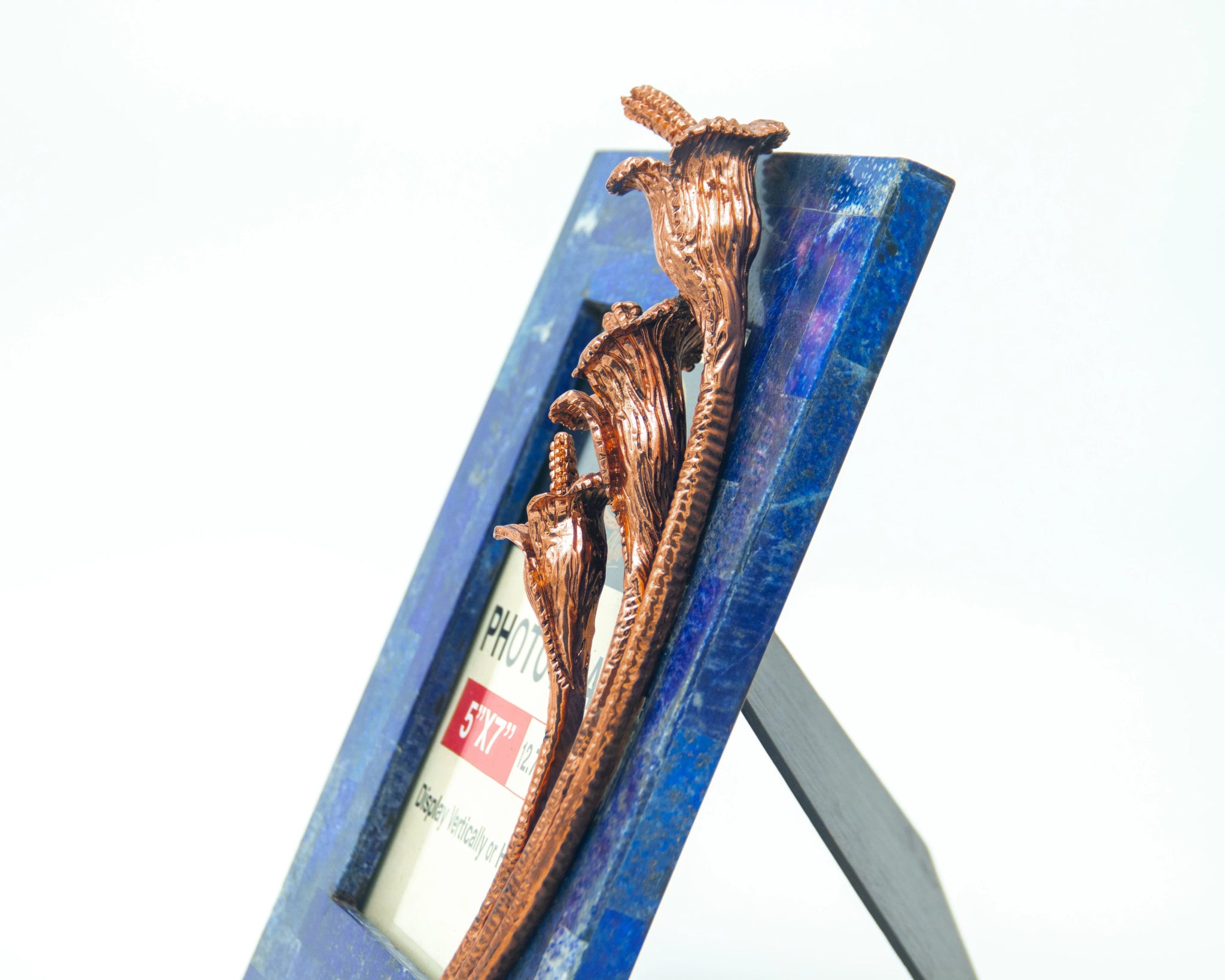
Natural stones are a lovely way to bring colour. Lapis Lazuli gives deep blue. Rose Quartz gives a soft pink. Malachite and Green Aventurine give rich green. No two stones look the same, so every piece feels one of a kind.
Step Three: Pick Your Main Piece
Every staircase wall needs one hero. This is the piece people see first from the hall. It should be larger than the others and placed near the middle or at the landing.
A big carved panel, a resin wall art piece, or a divine wall frame works well here. Keep it simple and let it breathe. Do not crowd it with too many small items around it.
For a spiritual home, a sacred wall piece at the turn of the stairs feels calm and welcoming. It gives the whole staircase a quiet centre.
Step Four: Add Frames That Follow the Stairs
Now build around your hero piece. The key idea is to follow the slope of the stairs.
- Hang frames in a gentle diagonal line, going up with the steps.
- Keep the gap between frames equal, about two to three inches.
- Mix sizes, but keep one common colour or material.
Semi precious stone photo frames are a beautiful choice for this wall. Each frame has its own natural pattern, so even a plain family photo feels special. Place one or two among your art pieces so the wall feels personal and not like a shop display.
Step Five: Use Metal for Soft Shine
A little shine makes a staircase wall glow, especially in the evening when warm lights are on. Metal catches the light as you walk past.
Silver plated wall hangings are a good fit for this. They go well with wood, resin, and marble dust. Use one or two pieces only. A small touch of silver feels rich and calm. Too much can feel heavy.
Step Six: Use the Landing for a Sculpture
If your staircase has a landing, a niche, or a small ledge, use it. This is a perfect spot for a sculpture or a statue.
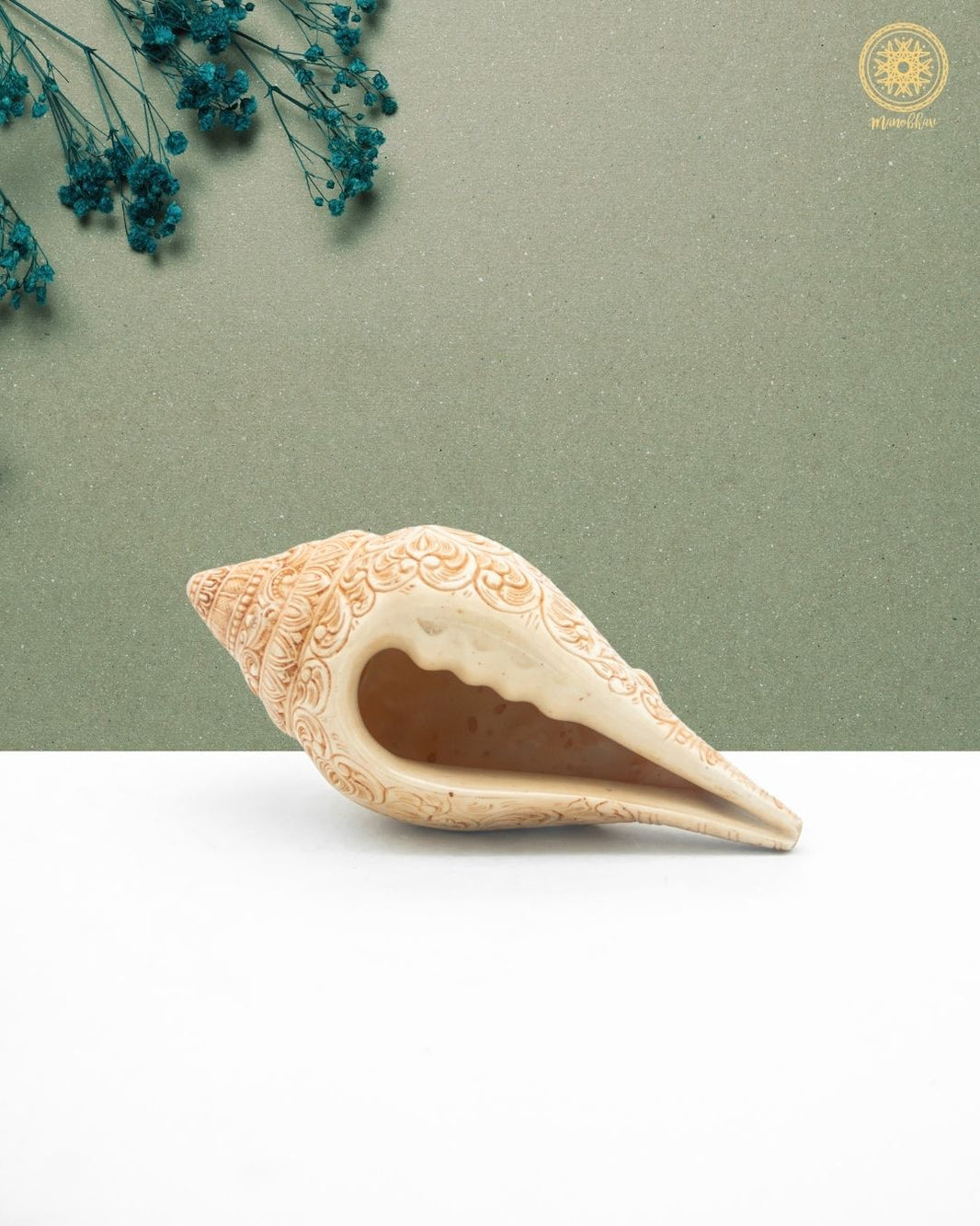
Marble dust statues look graceful here. Their soft ivory finish is gentle in the light, and the carved detail shows well from the stairs. A quiet figure on the landing makes people slow down and look.
If you have space for a standing piece, decorative sculptures can also work well on a low stand near the base of the stairs. Make sure it sits safely, away from the walking path.
Step Seven: Hang at the Right Height
Height is where many staircase walls go wrong. Follow these easy rules:
- Hang the centre of each piece at eye level while standing on that step. This is about 57 inches above the step you are standing on.
- Keep the lowest frame at least eight inches above the stair line, so no one bumps into it.
- Use strong hooks and secure fittings. Stairs are busy, and art should stay firmly in place.
- Lay everything on the floor first, then tape paper shapes to the wall before making any holes.
Common Staircase Wall Mistakes to Avoid
- Hanging frames in a flat straight line
- Using too many colours with no link between them
- Placing heavy pieces where people can touch them
- Filling every inch with no empty space
- Skipping the plan and guessing
- Choosing only mass produced items that all look alike
Why Handmade Art Works Better Than Machine Made
A staircase wall is seen again and again, every single day. This is why quality matters. A machine made print can feel flat after a while. A handcrafted piece keeps giving you something new to notice.
Manobhav works with skilled Indian artisans who use techniques passed down through generations. Each piece is shaped by hand using premium materials like marble dust, natural semi precious stones, resin, wood, and silver plated details. An artisan may spend days on a single piece. You can feel that patience in the finish.
When you place such pieces on a staircase wall, you are not only decorating. You are bringing a small part of India's craft heritage into your daily walk through the home.
Final Thoughts
A staircase wall does not need many things. It needs a plan, a clear colour story, and a few meaningful pieces placed with care. Start with one main piece. Add frames that follow the stairs. Bring in a little shine and a sculpture on the landing. Then leave some empty space so everything can be seen.
Many Indian homes have long treated every corner as a place for beauty and meaning. When you fill your staircase with handcrafted art, you carry that tradition forward. Each frame, stone, and statue holds the work of hands that learned from earlier hands. Every time you climb the stairs, that story walks with you.