
Some decor pieces get a quick look and nothing more. Others make people stop and smile. An elephant sculpture is often in the second group. It has weight, grace, and a story that goes back many centuries.
In Indian homes, the elephant has long stood for strength, wisdom, and good luck. You see it in temples, palace gates, and old carvings. Today, it can also be the star of a modern room. This guide will show you how to choose an elephant sculpture and place it so it becomes a true statement piece.
What Is a Statement Piece?
A statement piece is the one object that people notice first. It does not need to be huge. It only needs to be special enough to hold the eye.
A good statement piece has three things. It has a strong shape, fine detail, and some space around it. An elephant has all three. Its round body, curved trunk, and carved decoration make it easy to love from across the room.
Why Elephants Work So Well in Indian Homes
For many families, the elephant is a sign of calm power. It is big and strong, yet it moves slowly and gently. People often link it with wisdom and steady growth.
Some families believe that an elephant with a raised trunk brings good fortune. Others like a lowered trunk because it feels restful. There is no single right choice here. Pick the one that feels right to you.
An elephant also suits many styles. It sits well in a classic home with wood and brass. It also looks fresh in a modern room with clean lines and soft colours.
Simple Ways to Style an Elephant Sculpture in Your Home
Step One: Choose the Right Size
Size decides how strong the statement will be.
- Large pieces: These can stand alone on the floor or on a wide console. One big elephant is enough for the whole corner.
- Medium pieces: These suit a table, a mantel, or a sideboard. They give you a bold look without taking over.
- Small pieces: These work best in pairs or small groups, as they are too tiny to lead the room alone.
A simple rule can help. The piece should look important, but it should not push the other items away. If you can still walk around it with ease, the size is right.
Step Two: Match the Material to Your Room
Material changes the mood of a sculpture. Here is a quick guide.
- Silver plated: Adds a soft shine and looks rich in the evening light. It suits dark wood and deep colours.
- Natural stone: Stones like Green Aventurine, Lapis Lazuli, and Rose Quartz bring natural colour and pattern. No two pieces look exactly the same.
- Marble dust: Gives a smooth, ivory look that feels calm and clean.
- Resin and wood: Lighter in weight and good for detailed carving.
You can see how this looks in our decorative elephants collection, where each piece is made by hand.
Step Three: Pick the Right Place
Where you place the elephant matters as much as the elephant itself. Here are a few places that work well.
The Entrance
The entrance is the first thing guests see. An elephant on a console table or a floor stand sends a warm, strong welcome. Many families like a pair here, one on each side of the door or table. A pair feels balanced and traditional.
The Living Room
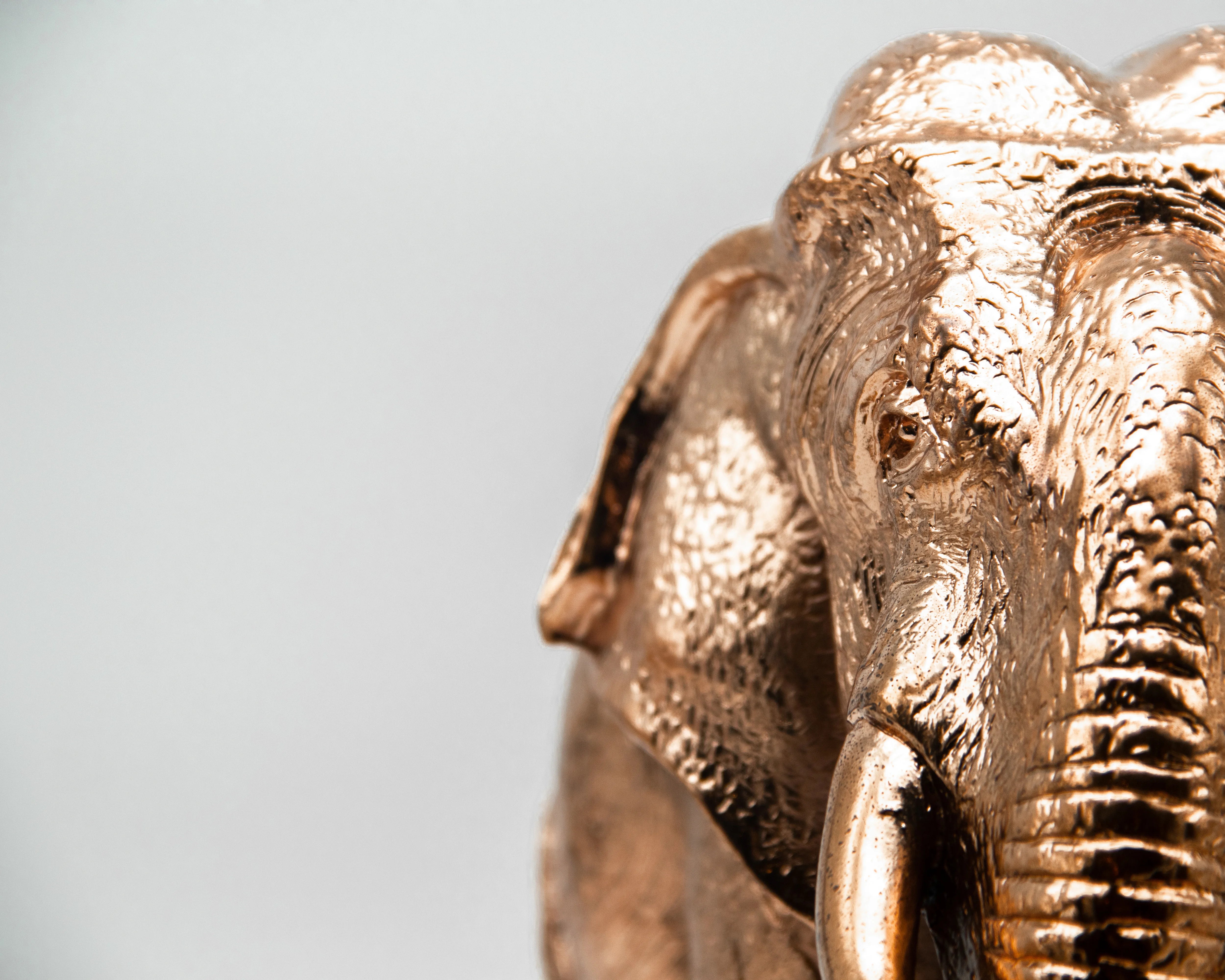
Place a medium elephant on the centre table, a side table, or a wide sideboard. Keep the area around it light. A candle, a small plant, or a single frame is enough. If you want an idea to start with, the rose gold elephant showpiece is a good example of a piece that works as a table decor item.
The Dining Area
A dining sideboard often looks empty. A pair of small elephants, or one medium piece, can fill that space nicely. Keep the colours soft so the food and the table stay the focus during meals.
The Bedroom
Here, choose a calm piece in soft colours. Avoid very bold shapes. A quiet elephant on a dresser or a bench at the foot of the bed feels gentle and restful.
The Work Corner
An elephant on a desk or a shelf can remind you of patience and focus. If you need more ideas for a work space, you can read our blog on best handmade showpieces for a modern office desk.
Step Four: Give It Space to Breathe
This is the step most people skip. A statement piece loses its power when it is surrounded by too many things.
- Leave a few inches of empty space on each side.
- Do not place more than two or three small items near it.
- Keep the background simple. A plain wall or a soft colour works best.
- Let one colour from the elephant repeat nearby, such as in a cushion or a vase.
The empty space is not wasted. It tells the eye, “Look here.”
Step Five: Use Height and Light
A small lift can make a big difference. Place the elephant on a low stand, a stack of books, or a wooden tray. This brings it closer to eye level.
Light also matters. A soft lamp or a warm bulb near the sculpture brings out the carving. Silver plated and stone pieces catch the light and look lovely in the evening. Avoid placing delicate painted pieces in strong sun for long hours, as the colour can fade.
Step Six: Try a Pair or a Small Group
One elephant makes a strong statement. A pair makes a calm and balanced one. A group of three at different heights gives a lively look.
If you try a group, keep these points in mind.
- Choose the same material or the same colour family.
- Mix sizes, such as one large and two small.
- Place them slightly apart, not touching.
- Face them in the same direction, or toward each other, but not away.
A family of elephants also carries a sweet meaning of togetherness, which many people enjoy in a family home.
Common Mistakes to Avoid
- Placing it in a crowded spot with many other objects
- Choosing a size that is too small for the space
- Using too many colours around it
- Putting it on the floor where it can be knocked by accident
- Mixing many different animal figures on one surface
- Picking a mass made piece that looks flat and plain
Why Handcrafted Elephants Stand Out
A machine can copy a shape, but it cannot copy the small touches of a hand. On a handcrafted elephant, you can see the fine lines on the ears, the pattern on the blanket, and the careful finish on the trunk.
Manobhav works with skilled Indian artisans who use skills passed down through generations. Each piece is made by hand with materials like marble dust, natural semi precious stones, resin, wood, and silver plated details. An artisan may spend many days on one sculpture, and that patience is what gives it life.
If you also like other figures, you can explore our unique showpieces for more ideas. A good showpiece is made to stay in a home for years, not just one season.
Final Thoughts
An elephant sculpture does not need a big room or a long plan. Choose the right size, pick a material that suits your space, and give it a spot with room around it. Add a little light, and let it lead.
For centuries, Indian homes have placed elephants at gates, halls, and entrances as a sign of strength and welcome. When you place a handcrafted elephant in your home, you carry that old tradition into modern living. It becomes more than decor. It becomes a quiet and steady presence that greets you every day.